
OctoGrasp - Cephalopod-inspired prosthetic arm
Daniel Siegel2022-2023 / during senior year in high school
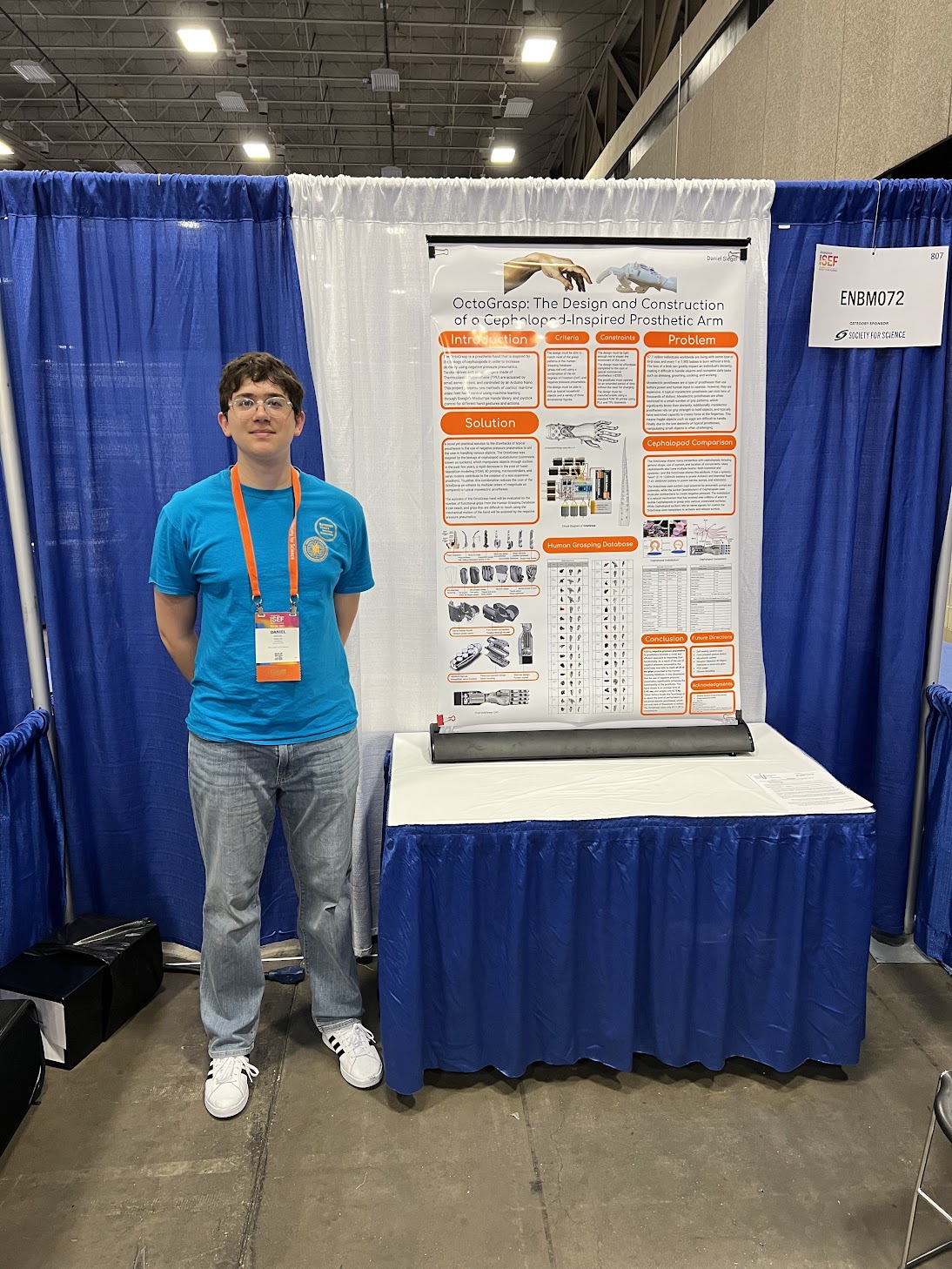
This project won a Grand Award at ISEF (International Science and Engineering Fair / ~1800 competitors nominated from 7+ million worldwide students who compete in high school science fairs yearly)
Summary
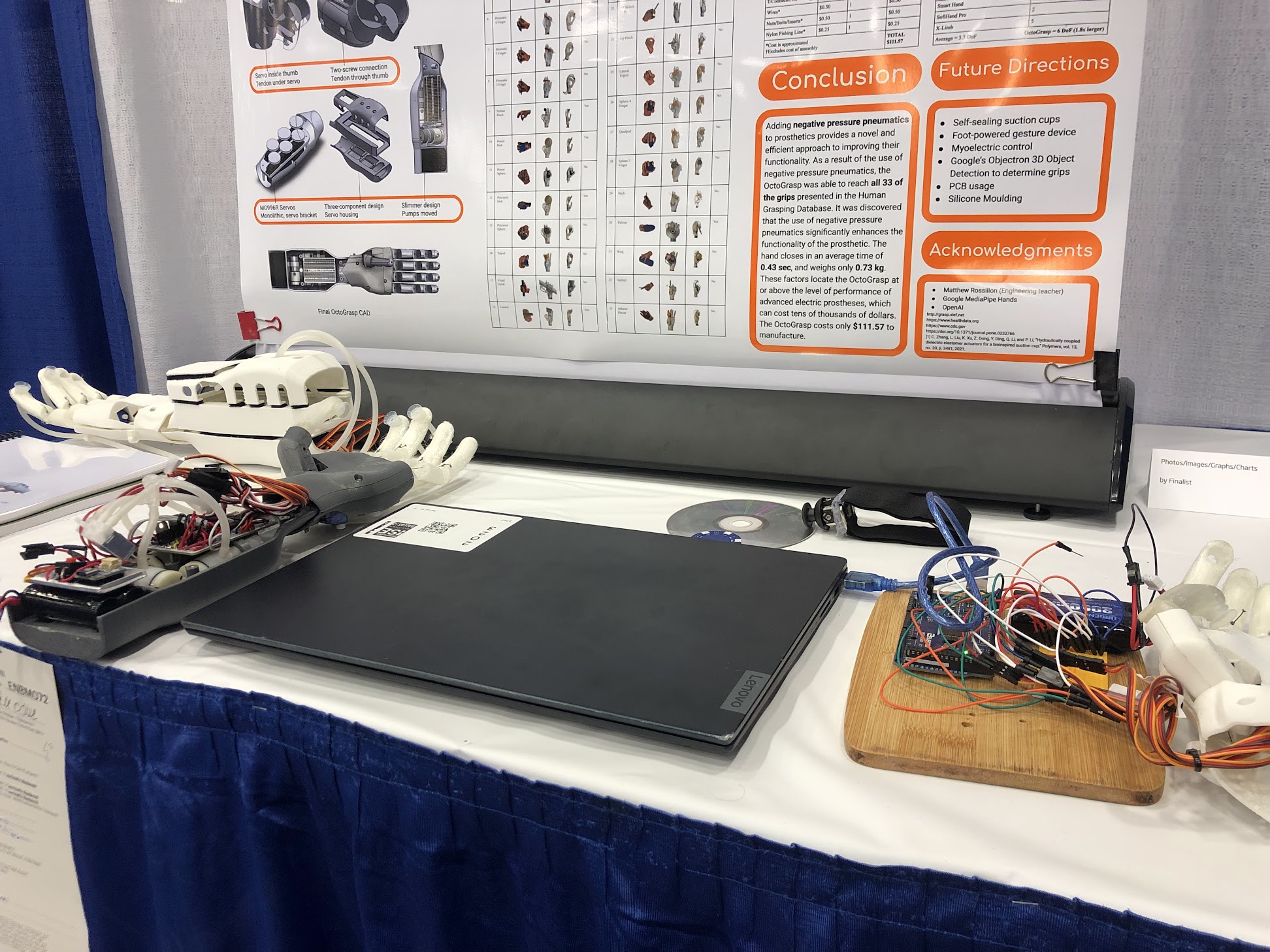
-
$111.57 to build[1], about 1% of a typical prosthetic ($10,000 to $50,000+).
-
0.43 seconds to close a grip: 3.6× faster than the average competitor, 2.3× faster than the fastest.
-
All 33 grips in the Human Grasping Database. Most commercial hands reach about half.
-
6 degrees of freedom (one per finger, plus a sweeping thumb).
-
0.73 kg, light enough to wear all day. Recharges over USB.
Approach

Most prosthetic hands hold things the way a clamp does: two or three motors squeezing hard. Squeeze too little and the object slips; squeeze too much and the egg is gone. And a hand built around force can only make a few shapes, so it can only do a few things.
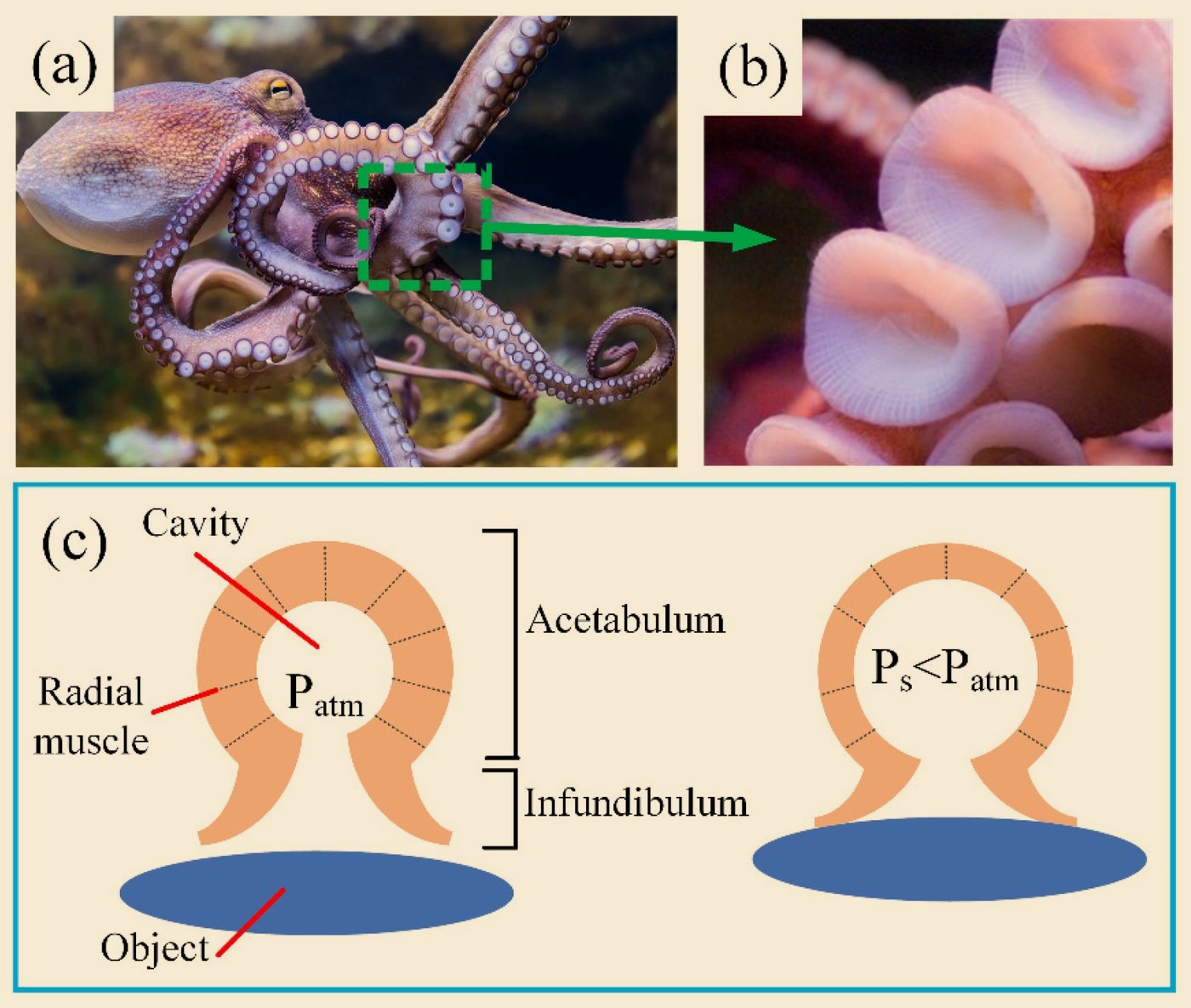
An octopus solved this differently.[2] It doesn't squeeze. Each arm is lined with suckers (anatomically, the acetabulum[3]), and to grab something it wraps an arm around the object and pulls a small vacuum inside each sucker. The acetabulum is relevant for dexterity since it has a watertight seal, relies on low pressure, and can maintain a firm hold... without any bones or clamps or excessive force! I was very curious about how this transfers to human dexterity, so I built OctoGrasp.
Background
Existing prosthetics are impressive and expensive. A myoelectric hand runs tens of thousands of dollars, and for that price it's often less capable than it looks: a couple of motors, a handful of grip shapes, little fine control. Fragile objects are difficult and small ones get dropped. A hand that makes only a few of the shapes a real hand makes can only do a few of the things a real hand does.
Suction System
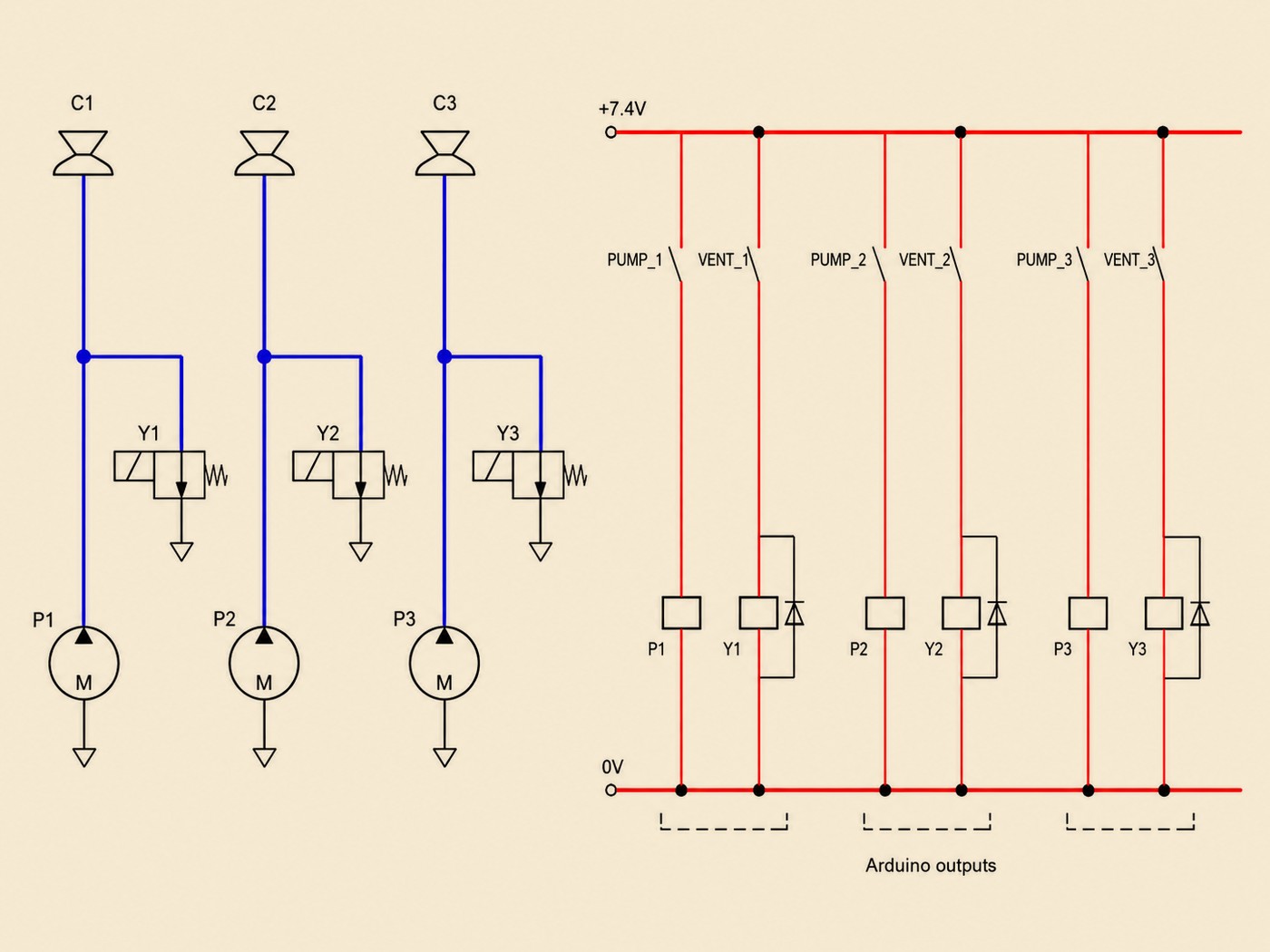
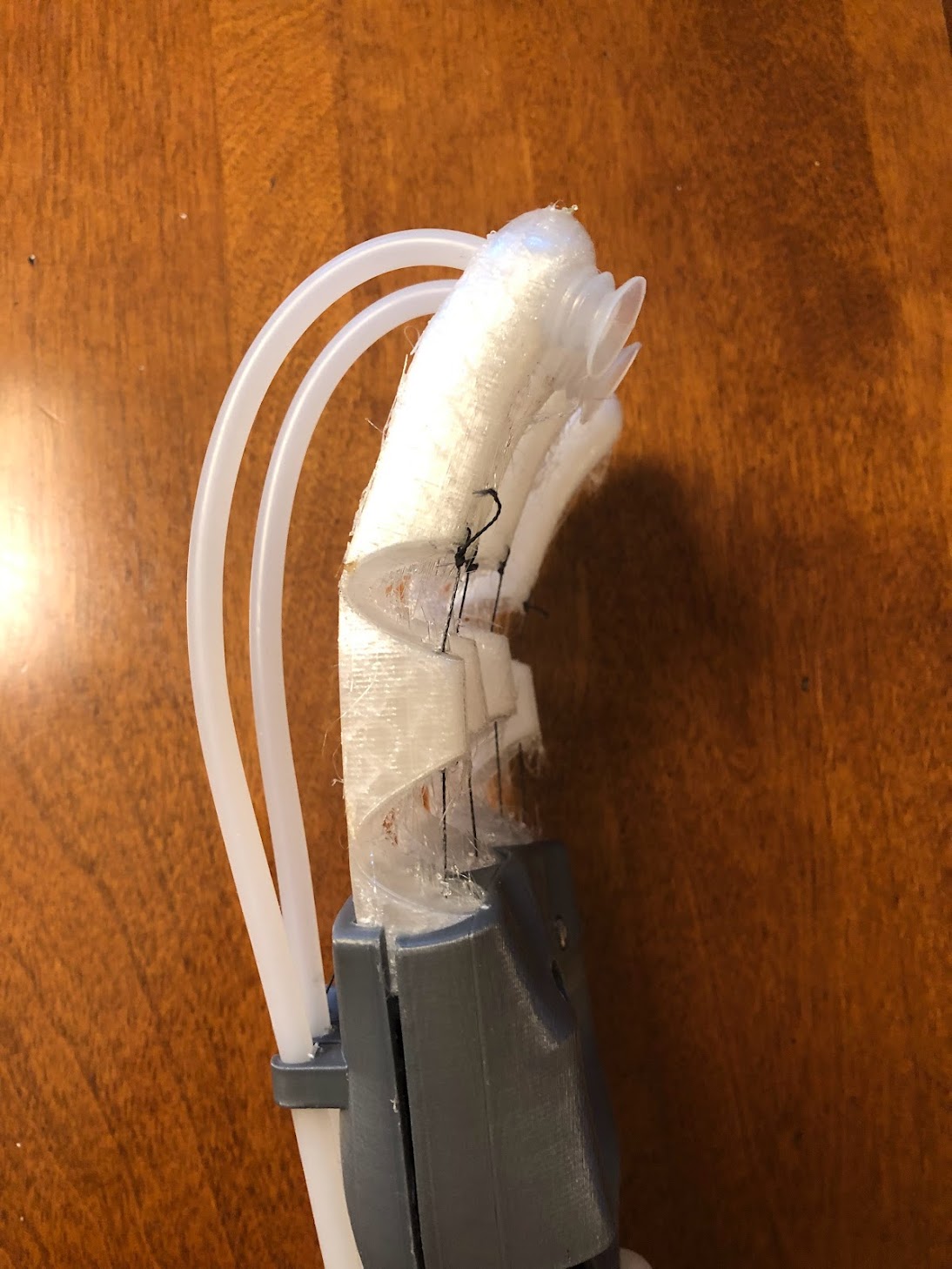
Silicone tubing runs from an air pump[4] to suction cups on the fingertips[5]. Until a cup touches something, the circuit is open - just air moving through. On contact, the pump pulls the air out and creates a vacuum. That negative pressure, spread across the cup, holds the object firmly and gently at once. A solenoid valve vents the circuit to release: air rushes back, pressure equalizes, the object drops.
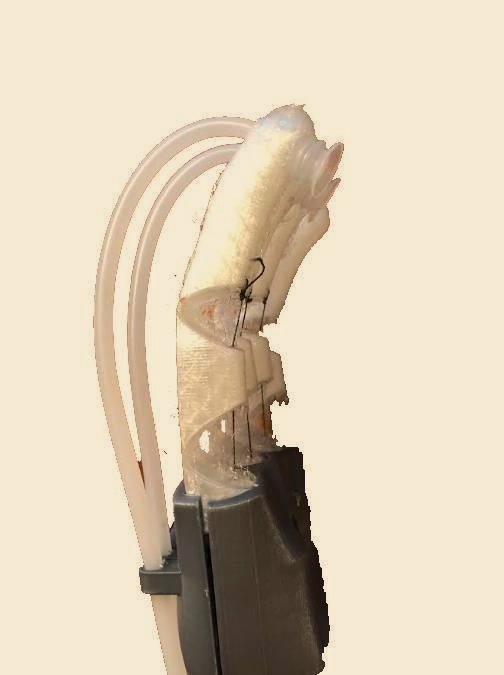
The OctoGrasp is uniquely suited for tasks like these since there are no crushing forces. This allows for improved compliance as compared to rigid mechanisms, and improves safety and viability of the arm in delicate environments.
Fingers
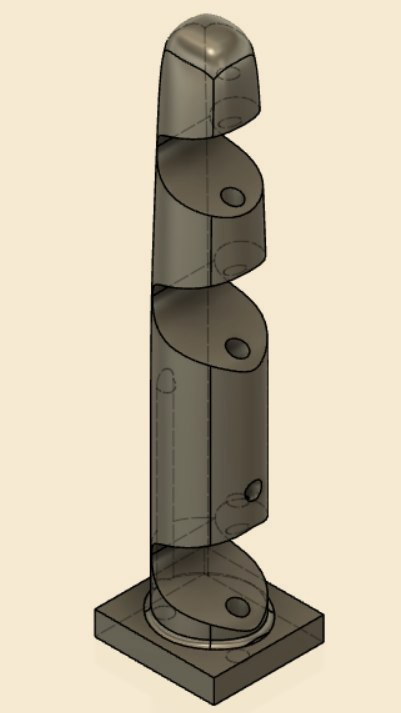
The fingers still wrap like fingers, and like an octopus arm they have no bones. Each is 3D-printed as a single piece of TPU, a flexible plastic, with no hinges and no screws. The joints are spots where the plastic is thinner[6], only a few millimeters, so it bends there and nowhere else. Pull a tendon and the finger curls; release it and the finger springs back open.
Cephalopod Comparison
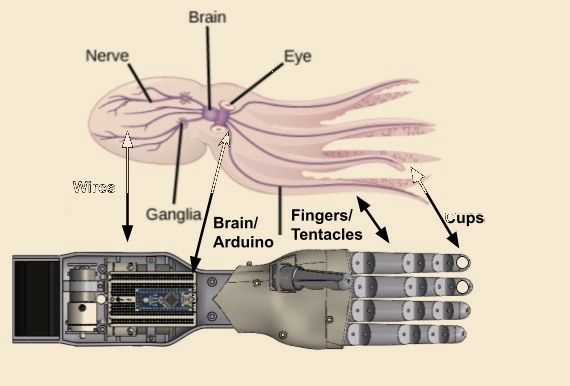
The parallel goes deeper than suction. Cephalopods run more than one heart (a systemic heart for the body, branchial hearts for the gills), and OctoGrasp ended up the same way. A 3.7V battery is its systemic heart, powering the Arduino brain; a 7.4V battery is its branchial heart, driving the servos, pumps, and solenoids. The Arduino sits where the brain sits, the wires run like nerves, the fingers are the tentacles, and the suction cups are the suckers. Notice that side by side, it maps quite closely![7]
Components
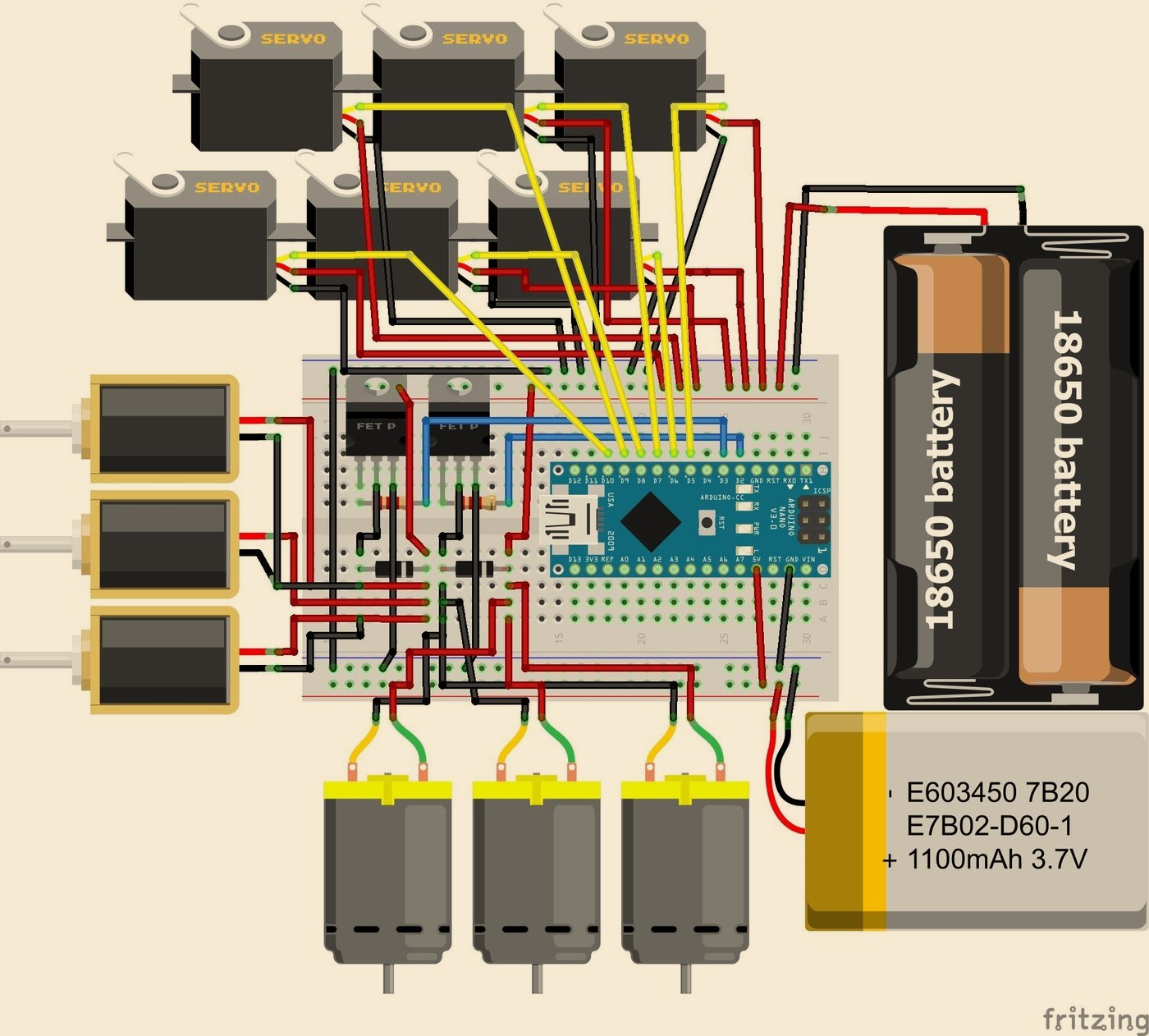
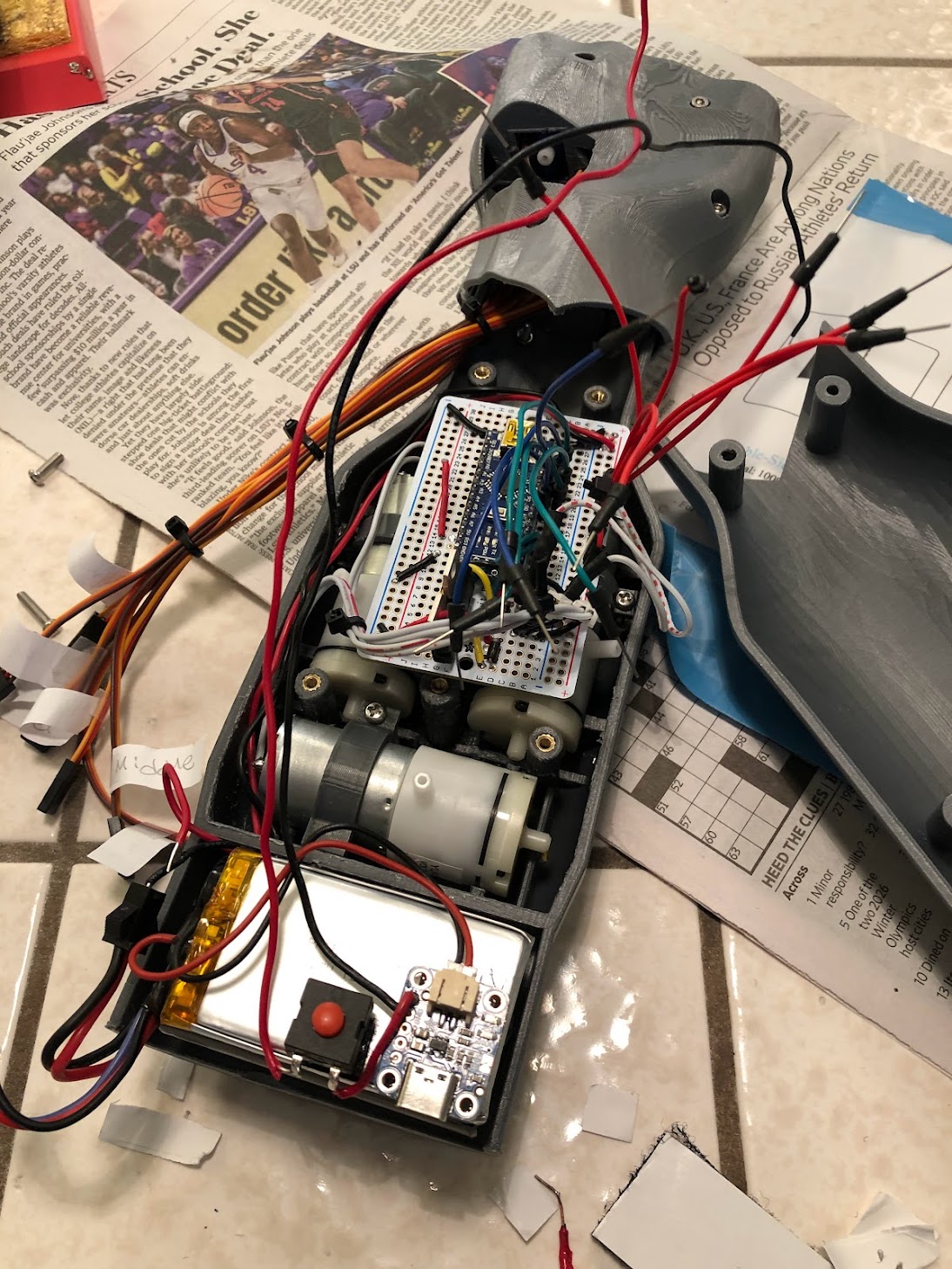
Brain. An Arduino Nano runs everything: low cost, small, simple to program. It reads the input and fires the right combination of servos, pumps, and solenoids.[8]
Muscle. Five Sg-90 servos pull high-strength tendons to curl the fingers, one servo per finger. A sixth sweeps the thumb across the palm so it can oppose the other fingers, six independent degrees of freedom in total. Three suction circuits add grip on top.
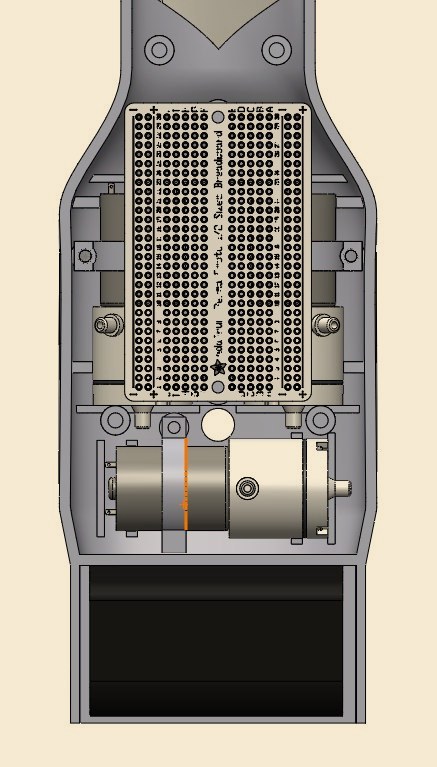
Frame. Palm and forearm are 3D-printed in rigid PLA; the fingers in flexible TPU. The forearm carries the electronics, pumps, and solenoids.[9] Everything recharges over USB.
Design Process
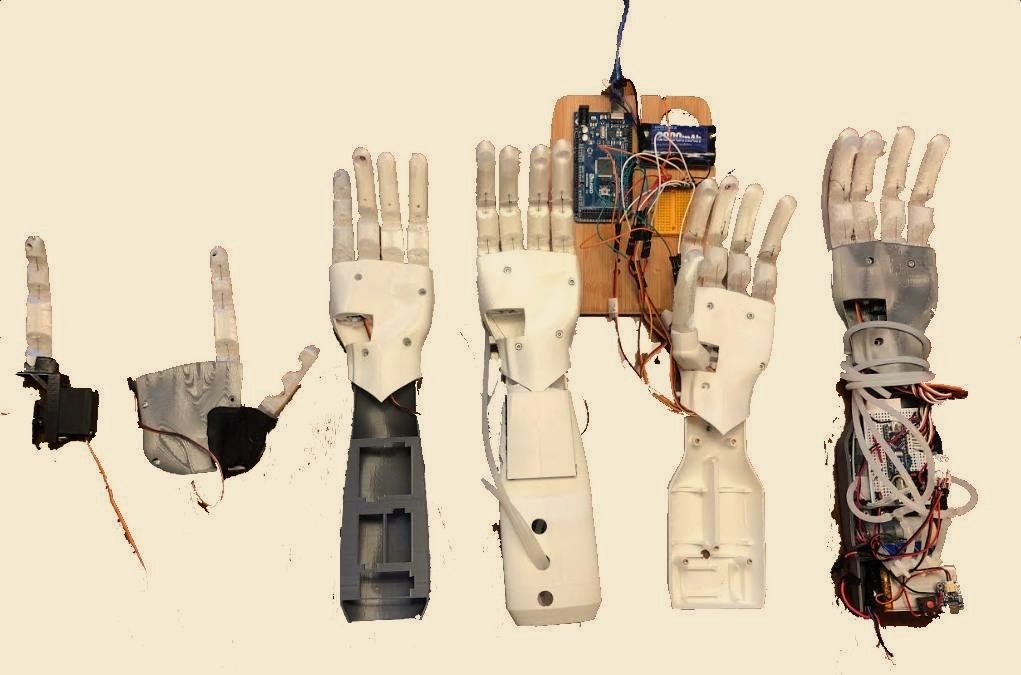
The final hand is the product of more than 20 prototypes[10] across six months: seven versions of the finger, eight of the palm.
The fingers began rigid: CNC-milled polycarbonate panels bolted together with elastic bands and a pull cord. They worked but were fussy. The turning point was removing the hinges entirely and printing the whole finger as one flexible piece of TPU, using thinned sections as joints. Later revisions moved the tendon hole outward for leverage, thinned the joints so the small servos could pull them, and dropped a knuckle for a better wrap.
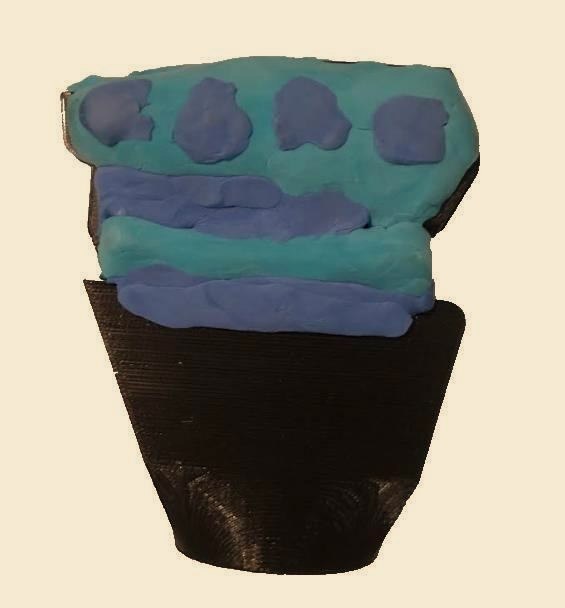
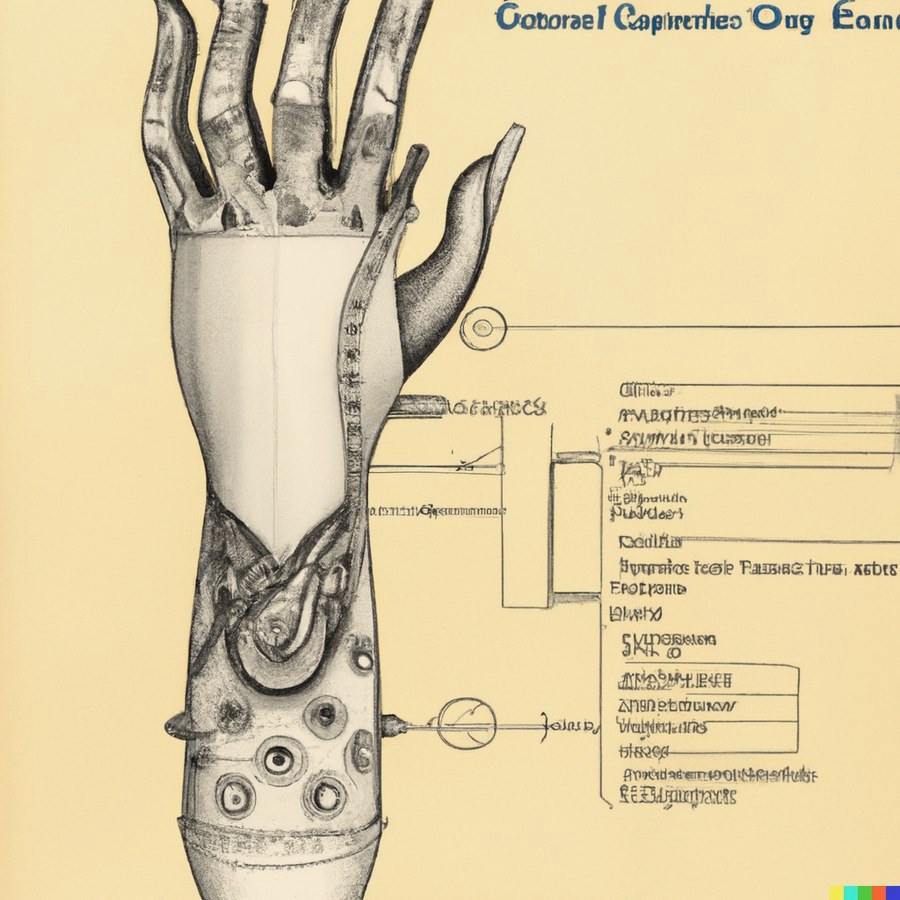
The palm was the hardest component - built from lofts and guide curves in CAD, and complex enough that early versions had no thumb. One prototype I printed and then reshaped by hand in air-dry clay[11] for a more human profile; one I derived from an image generated with DALL·E 2[12], which pushed the design slimmer. The bulky-forearm problem was solved by moving the servos out of the arm and into the back of the palm, which cleared the forearm for the electronics and pumps.
Results
I evaluated the hand on two metrics: how many grips it can make, and how fast it closes.
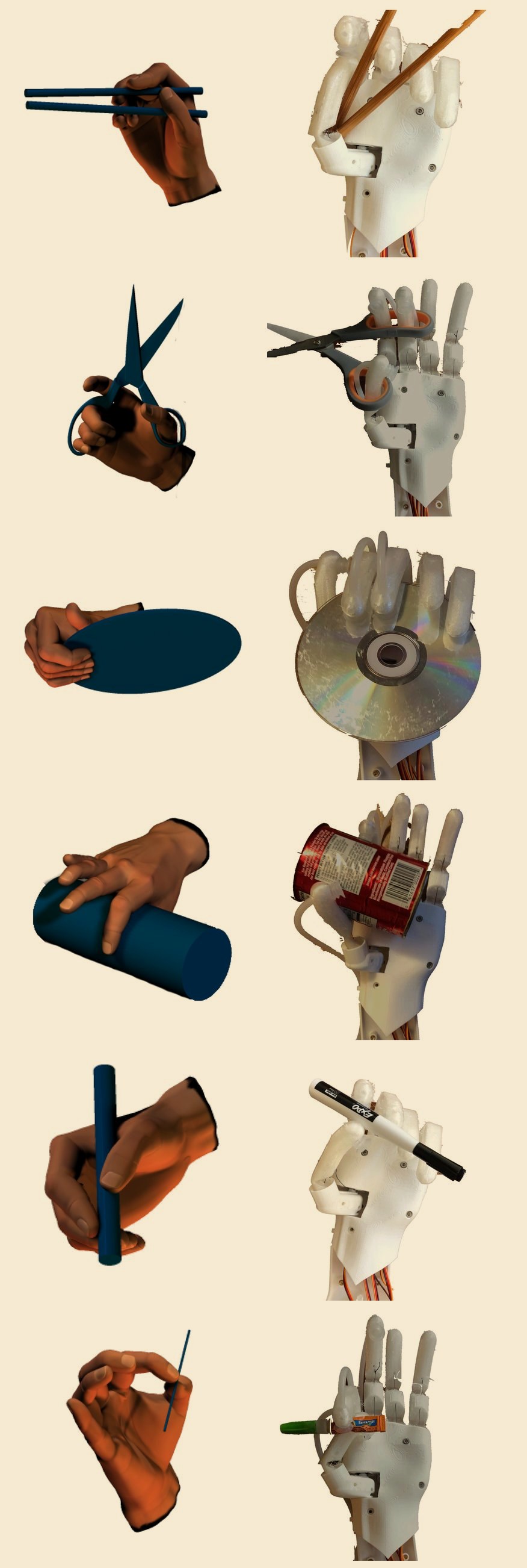
Dexterity. I measured against the Human Grasping Database, a taxonomy of the 33 grasps used in everyday life, built by prosthetics researchers to assess exactly this. A typical prosthetic reaches about half. OctoGrasp reached all 33.[13] Where the fingers alone could not form a shape, suction closed the gap; the combination of wrapping and sticking is the point.
Speed. Across 40 trials, the fingers closed in 0.43 seconds on average (434 ± 88 ms). Most prosthetics take one to two seconds; even fast research hands sit near 1.3.
Degrees of freedom. More independent motions means more grips. OctoGrasp has six (one per finger, plus the sweeping thumb) against an average of about three.
Cost
OctoGrasp costs $111.57 to build. At scale, with parts in bulk and the plastic injection-molded, the per-unit cost drops below $50.
Cost is the point of the project. A hand that costs a hundred dollars is a hand people can get, including where a $30,000 device will never reach. (Shown as a table rather than a bar chart: on a linear axis OctoGrasp's bar would vanish next to a $50,000 arm.)
| Hand | Price |
|---|---|
| OctoGrasp | ~$112 to build (~$300-1,000 retail) |
| TrueLimb | under $10,000 |
| Hero Arm | $10,000-20,000 |
| BrainRobotics Hand | $20,000-30,000 |
| Bebionic Hand | $30,000-40,000 |
| Adam's Hand | $30,000-40,000 |
| i-Limb Access | $40,000-50,000 |
| LUKE Arm | more than $50,000 |
| Atom Touch | more than $50,000 |
What's inside the $111.57
| Item | Unit cost | Qty | Total |
|---|---|---|---|
| PLA filament | $19.99/kg | 391 g | $7.82 |
| TPU filament | $27.99/kg | 55 g | $1.54 |
| Silicone tubing | $2.50/m | 3 m | $7.50 |
| Arduino Nano (Elegoo) | $7.66 | 1 | $7.66 |
| Sg-90 servo | $1.69 | 6 | $10.14 |
| Mini air pump | $8.99 | 3 | $26.97 |
| Perma-proto board | $4.50 | 1 | $4.50 |
| Solenoid air valve | $2.95 | 3 | $8.85 |
| TIP120 transistor | $0.83 | 2 | $1.66 |
| Rectifier diode | $0.32 | 2 | $0.64 |
| Micro LiPo charger | $5.95 | 1 | $5.95 |
| 1200 mAh 3.7V battery | $9.95 | 1 | $9.95 |
| 2000 mAh 7.4V battery | $12.49 | 1 | $12.49 |
| On/off button | $1.95 | 1 | $1.95 |
| Tubing T-connector | $0.90 | 3 | $2.70 |
| Wires, nuts/bolts, fishing line | - | - | ~$1.25 |
| Total | $111.57 |
Control
OctoGrasp has two control methods. A small joystick tucked between the thumb and finger of the other hand switches grips, runs the pumps, and releases the suction. Alternatively, a webcam running Google's MediaPipe tracks the opposite hand and mirrors its finger positions in real time, with a camera small enough to wear on a necklace and watch the intact hand.
Future Improvements
-
A single pneumatic circuit in place of three pumps and solenoids, using self-sealing suction cups that seal only on contact, cutting cost, size, and weight.
-
A custom PCB to replace the breadboard and simplify the wiring.
-
Smarter control: myoelectric electrodes, a foot-gesture pad, or computer vision that identifies an object and selects the grip automatically.
Awards
- ISEF 2023 - Grand Award in Biomedical Engineering
- California State Science Fair - Top Prize
- Synopsys Silicon Valley Science Fair - Grand Prize, plus the IEEE, IBM, and Naval Research prizes
Learn more: OctoGrasp project page.
.jpg)
From the build and the competition circuit. Thanks to Matthew Rossillon, engineering teacher at Palo Alto High School, for the guidance.